



Departure & Flight: Gather early this morning at Shanghai Pudong International Airport, Terminal 2. Depart via direct international flight to the capital of Finland, Helsinki.
Overnight Cruise: Board the ship in the evening to begin the overnight sea voyage. The cruise glides through the archipelago, often referred to as 'the fairyland of islands,' where the fresh sea breeze and gentle lapping of the waves create a peaceful ambiance. Your cabin is designed for comfort, ensuring a restful night's sleep. Onboard, multiple dining venues offer a buffet dinner featuring fresh Northern European ingredients and a variety of flavors. You may also browse the comprehensive duty-free shops to find premium brands. Early the next morning, the ship docks at Stockholm, marking a seamless transition from sea to city in a matter of moments.
Stroll through the Old Town of Stralsund, visiting the City Hall's Blue Chamber and the Art Subway.
[Stralsund] (approx. 1 hour): This picturesque water city, often referred to as the “Venice of the North,” features elegant timber-framed houses in the city center set against a backdrop of towering castle spires under the azure sky. Among the sparkling waves, golden-hued palaces interweave with medieval narrow streets and impressive modern Gothic high-rises, creating a harmonious yet majestic atmosphere.
[Stralsund Cathedral] (Exterior view): Officially known as St. Nicholas’ Cathedral, this is the oldest cathedral in the old town and a significant example of Baltic brick Gothic architecture in Rügen.
[Stralsund Old Town]: Located on a small island in the center of Stralsund, the old town’s history dates back to the 13th century. The streets are lined with medieval lanes, round-stone paved roads, and ancient buildings, heavily influenced by Northern German style.
[Stralsund City Hall] (approx. 30 minutes, admission & guided tour included): The Blue Chamber inside was the venue for the grand banquets following the award of the Nobel Prize. The building itself is constructed primarily of red bricks, with a tall bell tower on the right side topped with the golden three crowns, representing the three kingdoms of Denmark, Sweden, and Norway. The interior of the bell tower houses a museum dedicated to art exhibitions.
[Stralsund Subway] (approx. 15 minutes): Due to the local geology, many subway stations in Stralsund are excavated directly into the rock. Under the illumination of the lights, the stations resemble primitive caves. Over a hundred artists have contributed their unique styles to decorate these cave paintings, making them a major attraction. Here, you can appreciate various paintings, sculptures, and diverse artistic expression methods that have captivated numerous tourists.
[King's Garden] (approx. 30 minutes, sightseeing & free activity): Once exclusively reserved for the royal family, with dedicated farmland and gardens where commoners were forbidden to enter. However, during the 700th anniversary of the city’s establishment in 1953, the government decided to renovate the garden and open it to the public. The garden now features many romantic coffee shops and open-air dance stages, occasionally hosting free swaying, gentlemen’s events, and classical music concerts.
Explore the Hamlet Fortress in the Rhine Gorge.
[Hamlet Fortress / Kronenburg Palace] (approx. 1 hour inside): Also known as Kronenburg Palace, the fortress is built of rock and features steep, grey copper roofs. It stands as a majestic and striking example of Northern European Renaissance architecture, and was inscribed on the UNESCO World Heritage List on November 30, 2000.
[Rose Castle] (approx. 1 hour tour): Nicknamed the "Rose Palace," this castle was originally built in 1606 and served as the imperial residence until 1720. In the Great Hall, you can admire the famous Rose Castle chandelier, which depicts victories claimed by kings in the war against Sweden. In the throne room, a portrait shows the Empress consulting with Sir Frederick von Schwende, whom legend says was her mistress. The underground exhibition hall also displays Danish royal and imperial jewels.
[Tre Kronor Cathedral] (approx. 15 minutes exterior tour): Denmark's largest copper-domed cathedral, often referred to as the "Copper Cathedral" due to its extensive use of copper cladding.
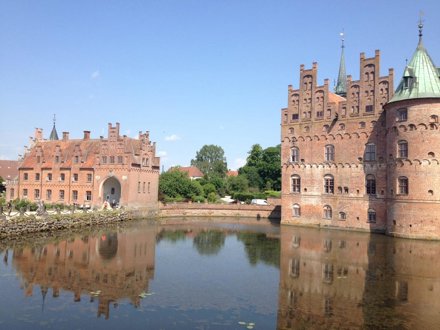
[Tre Kronor Castle] (approx. 1 hour tour): Also known as the Water Castle, it is the most magnificent Renaissance building in Northern Europe, often called the "Versailles of the North." Surrounded by century-old moats, its red brick architecture and central square are striking. At the center of the square is a statue fountain dedicated to the sea god, with the imposing castle rising in the background. Although the castle was largely destroyed in a great fire in 1859, it was fully renovated thanks to a generous sponsor, leading to the establishment of the National History Museum, turning it into a vibrant national treasure.
[Amalienborg Palace] (approx. 15 minutes exterior tour): Built in the 18th century, this is the main palace of the Royal Family. Located around the eight-sided Octagonal Square, it consists of four identical buildings. If you are lucky, you might even catch a glimpse of the royal guards wearing their distinctive high hats from fairy tales.
[Little Mermaid Statue] (approx. 15 minutes tour): A world-famous bronze statue and symbol of Denmark. From afar, the mermaid appears elegant and serene; up close, her face reveals a pensive expression.
[Gefion Fountain] (approx. 15 minutes tour): Comprising a bronze group of the goddess Gefion, four oxen, and plowshares, this is a masterpiece of Danish cultural tradition. The goddess, with flowing hair, holds a plow in one hand and a whip in the other, driving four divine oxen as they toil to farm, with water spouting from the oxen's noses and the plowshare.
[City Hall Square] (approx. 30 minutes tour): The heart of the city and the national nerve center. The square features the "0 Kilometer" marker, indicating that all distances to Göthenburg are measured from this point.
[Andersen Statue] (approx. 15 minutes tour): Hans Christian Andersen, the "Father of Modern Fairy Tales," wove beautiful childhoods for millions of children around the world. To honor him, a bronze statue about 3 meters tall was erected next to the city hall. Passersby often look up to admire the master's face or take photos for commemoration.
[Göteborg New Harbor] (approx. 30 minutes tour): Stroll along the canal banks filled with docked wooden boats and colorful houses, feeling as if you've stepped into a Danish fairytale.
 安徒生铜像
 新港
[Tromsø] Known as the “Gateway to the Arctic” and the “Arctic Capital,” Tromsø is one of the eight major locations for aurora observation. Situated in northern Norway, this port city is a rich tapestry of culture and history, surrounded by mountains, fjords, and islands. It served as a vital stopover for Arctic explorers and remains one of the most prosperous cities within the Arctic Circle.
[Tromsø Funicular] (approx. 45 minutes):* The Tromsø Funicular runs between Solsiden on the island of Tromsdalen and the peak of Storsteinen. The single-ride duration is approximately 4 minutes. The system features two cabins named “Seal” and “Polar Bear,” each with a capacity of 28 passengers. From the viewing platform at the upper station, you can enjoy panoramic views of Tromsø city, as well as the surrounding islands, highlands, and fjords.
[Arctic Cathedral] (approx. 15 minutes):* Also known as the Tromsdalen Church, this striking structure is often described as the most modern cathedral on the Arctic Sea. Its design is said to be inspired by the winter sky and the aurora borealis in Tromsø. Inside, a stained-glass window approximately 12 meters high and weighing 6 tons casts beautiful light rays throughout the day.
[Northernmost McDonald's]: The world's northernmost McDonald's is currently located in Tromsø, Norway. This new outlet opened on March 15, 2024, replacing the previous record-holder in Finnvær. Situated at 69°38'56.04" N and 18°57'18.36" E, the Tromsø location now holds the title of the northernmost McDonald's globally.
[Aurora Borealis Reminder]: Since you are still within the Arctic Circle, be sure to look up at the sky in the evening for a chance to see the Northern Lights. Please note that the aurora is a natural phenomenon dependent on daily weather conditions, and its occurrence cannot be guaranteed. We appreciate your understanding.
Explore the ancient Hroðfoss in the north of Hallasvik, visit the Sami reindeer farm, and spot eagles in the fjords.
[Kort Old Town] (approx. 30 mins): Korts Old Town is a small town located in the Torsby County of the Kolt Peninsula, sitting between a coastal mountain ridge and a fjord. It's a charming little town with a long history. If you visit during the warmest days of summer, you can explore along the historic walkway and visit traces of the Vikings, enjoy the old-fashioned farm houses, and taste the long-standing traditional local cuisine. In the Polar Night season, you can gaze at the brilliant starry sky above the Polar Night, and perhaps get lucky and even catch a glimpse of the magical aurora borealis.
[Sami Ethnic Farm & Reindeer] (approx. 30 mins): Enjoy the stunning view of the snow and ice on the way. When you arrive, you will be greeted in the Sami language by Sami locals wearing traditional ethnic attire. After that, the Sami locals will lead you on a tour of the ethnic village, allow you to get close to the reindeer, and let you experience raising reindeer.
[Mountain Fjord Boat Tour] (approx. 1 hour, including boarding and disembarking): Mountain Fjord is a stunning fjord located in North Norway and is considered the most famous fjord in Lovén. The boat trip to the Mountain Fjord will leave you breathless; the dramatic scenery and majestic mountains will give you a deep sense of awe and humility. The mountain ridge of the Mountain Fjord rises over 1,000 meters directly from the seabed. In this area, you can also find Europe's largest sea eagle colony. On the boat trip to the Mountain Fjord, you will see sea eagles soaring between the rocky cliffs and the vast water surface. You will also have the chance to feed these majestic birds, leaving you with a unique and unforgettable experience.
[Aurora Borealis Observation Hint] You are still within the Arctic Circle. In the evening, you can look up and observe. It's not impossible that the aurora will descend. (Aurora is a natural phenomenon, and whether it appears depends on the weather conditions of the day, so we cannot guarantee that you will definitely see it. We appreciate your understanding.)
[E10 Scenic Route] (approx. 1.5 hours): Immerse yourself in the postcard-like landscapes of Reine and Hamnøya. The Norwegian E10 Highway offers breathtaking views of Lofoten regardless of the season. This cross-border scenic route, connecting the Lofoten Islands in Norway to Narvik in Sweden, is renowned as the 'Kings Road' and is one of Norway's 18 National Scenic Roads. Many visitors find Lofoten just as beautiful in winter as in summer. The arctic winter is the prime time to observe the northern lights, a perfect blend of light and color.
[Å (A)] (approx. 30 minutes): A, also known as Å village, is a fishing village located at the southern tip of the Lofoten Islands and serves as the southern endpoint of the E10 highway that traverses the archipelago. The name is derived from the last letter of the Norwegian alphabet. As one of the world's primary centers for salmon production and processing, the village's unique landscape is defined by the traditional red rorbu cabins and fish-drying racks along the shore, making it a must-visit destination in Lofoten. It is a paradise for photographers; upon arrival, you will be instantly captivated by the iconic red fishermen's cottages.
[Reine] (approx. 30 minutes): Located in the southeastern part of the Lofoten Islands and adjacent to the E10 highway, Reine is widely regarded as one of the most beautiful fishing villages in the world, attracting photographers from across the globe. Red wooden cabins are scattered along the coast, backed by unspoiled, majestic mountains, creating a scene that resembles a painting or film still. You will likely exclaim in awe at such vivid beauty. The air here is pure, serene, and pastoral, offering a peaceful, fairy-tale-like atmosphere.
[Hamnøya] (approx. 30 minutes): A place that seems to have been forgotten by time, Hamnøya offers the kind of retirement life many only dream of. In any season, the surrounding mountain landscapes are stunning, and in the early morning, the rhythmic sound of waves crashing against the shore adds to the comfort. Hamnøya is one of the three most beautiful small fishing villages on Moskenes Island. Standing inside the village, one feels a sense of seclusion and tranquility. It featured prominently in one of the most shocking global films of 2014. The bridge from the western side of the village entrance toward Reine offers a highly favorable shooting angle.
[Tromsvikfjord] (approx. 30 minutes): Located on the west coast of Lofoten, this is one of the best-preserved century-old fishing villages. Its 19th-century salmon oil factory, smoke cabins, old shops, and red boats remain in use today. This is not a 'restored attraction' but a living fishing site. Yellow wooden houses, old boats, and wooden barns create the most 'timeless' living scene in Lofoten. Note: If Tromsvikfjord is closed or access is restricted, the itinerary will be adjusted to Balstad Fishing Village, with a refund of 10 EUR per person for the ticket difference.
[Aurora Borealis Tips]: You are still within the Arctic Circle. Keep looking up in the evening, as the northern lights may make an appearance (Note: Auroras are a natural phenomenon; visibility depends on weather conditions and cannot be guaranteed. Please understand any inconveniences.)
Explore the Lofoten fishing villages, trace the roots in Kabelvåg, and watch a football match in the sea at Ålesund.
[Svolvær] (approx. 30 minutes): Svolvær lies in the Vestfjorden fjord, separated from the Norwegian mainland. The Lofoten Islands, rising out of the sea like a range of rugged mountains, are known as the "Wall of Lofoten." The surrounding seas are teeming with herring and capelin. The islands are dotted with bogs and hills, with snow-capped mountain ranges towering throughout the year. Small fishing boats drift on the deep blue sea, and cute little houses sit by the seashore, creating a beauty that is hard to describe in words.
[Svolvær Church] (exterior view approx. 15 minutes): Located in the center of Svolvær town, Svolvær Church is a standout due to the lack of tall buildings around it. It is a church located within the Arctic Circle, funded and built by local residents in 1934. The church has a distinctive style—clean, practical, and modern—quite different from the old churches elsewhere in Norway. Surrounded by snowy scenery, blue skies, and sea views, it is a characteristic fishing village church.
[Lofoten Islands]: In Norwegian, the name means "Cat's Claw." The Vestfjorden fjord separates the islands from the Norwegian mainland, leaving them scattered like solitary points on the Barents Sea. From a distance, the archipelago looks like a chain that is sometimes visible, sometimes hidden, forever connected.
[Kabelvåg]: The oldest town in Lofoten, Kabelvåg was the most important fishing village in the Lofoten archipelago until the 18th century. This is also the village where Lofoten's first church and the first traditional fisher's cabin (Rorbu) were built. It is the perfect starting point for exploring the magic of the Arctic Circle.
[Kabelvåg Wooden Church] (exterior view approx. 15 minutes): A famous landmark in the Lofoten Islands, this is the largest wooden church in northern Norway. Its exterior resembles a castle, and the building is grand and very striking. The church has a very long history, although it is not open all the time. It is only open on days of service, and the local community typically only holds services two or three times a month.
[Ålesund Football Stadium] (approx. 15 minutes): The Ålesund football stadium is located in the eponymous small fishing village of Ålesund, one of the many small islands close to the Norwegian coast. The fishing village has a population of only 500 people, so it is not surprising that this small stadium is used only for amateur matches. This is the main venue for the Ålesund Sports Club, where they train their players and the island's young athletes. Its geographical location dictates that this astonishing stadium cannot receive the usage it deserves, but its stadium environment certainly brings people an extra "experience." Especially for those spectators, surrounding the stadium is not plastic chairs, but the real Norwegian sea!
[Aurora Reminder]: You are still within the Arctic Circle. In the evening, look up more often to observe; the aurora may just descend (the aurora is a natural phenomenon, and its appearance depends on the day's weather conditions and cannot be guaranteed. We apologize for any inconvenience).
Board the Flom mountain train and venture into the heart of Kotor Bay.
[Ostuni Opera House] (approx. 15 min, exterior view only): Located on Ostuni Bay near the central bus station, this masterpiece of architecture is distinguished by its ship-like exterior.
[Ostuni Royal Palace] (approx. 15 min, exterior view only): This is the place where the Duke of Ostuni handles his official duties, holds cabinet meetings, hosts banquets, and receives foreign dignitaries.
[Nobel Peace Centre] (approx. 15 min, exterior view only): Situated next to the town hall, this museum displays materials and objects related to the Nobel Peace Prize.
[Ostuni Town Hall] (approx. 15 min, exterior view only): Built in 1950 to commemorate the 900th anniversary of Ostuni's founding, it is known as the “Double-Red-Brick Building.” It is surrounded by numerous sculptures representing various aspects of daily life for the people of Ostuni. It is also one of the venues for the Nobel Prize awarding ceremony.
[Kotor Bay]: The deepest bay in Montenegro and the world, measuring 204 km in length and reaching a depth of 1,308 meters. The village of Flom is hidden at the end of this serene bay, nestled between three snow-covered mountains. Stepping onto the dock, you are greeted by a small railway station. The village is world-famous as the starting point of the Flom Railway. With a population of fewer than 400, it attracts approximately 400,000 tourists annually.
[Flom] (approx. 30 min): A small village by Kotor Bay, often called “the place closest to the sky.” Nestled in the central area of the Bay of Kotor and embraced by three large mountains, Flom offers an idyllic and captivating landscape. Although the village has only 400 residents, it welcomes 1 million tourists from all over the world each year. It boasts the unique natural beauty of Montenegro's bays, serves as the starting point for the famous Flom Mountain Railway, and is an important cruise port.
[Flom Mountain Train] (approx. 45 min): Named a “Top 10” European rail experience by Nat Geo Travel and ranked as one of the top rail experiences worldwide by Lone Planet in 2014. You can watch rivers snake down from the depths of the bay, waterfalls cascade down steep mountainsides, snow-capped peaks stand on both sides of the fjord, and pastures precariously hang on steep slopes.
Montenegro Stroll in Budva & Mount Orlov: Stroll through the streets of Budva and ascend Mount Orlov (Orlova Ćupela) to overlook the city of seven hills.
[Vodice] (approx. 30 minutes): The small town of Vodice serves as a key transit point along the Bay of Kotor route and is world-famous as the birthplace of Vodska mineral water. The water is exceptionally clear, sweet, and naturally low in mineral content, making it non-irritating to the stomach with a superior taste. Over time, it has become a global celebrity, becoming the favorite choice for top-tier hotels, restaurants, resorts, and nightclubs worldwide.
[St. Mary's Church] (exterior view, approx. 15 minutes): Construction began in the mid-12th century. It is one of three medieval churches in Budva and the oldest building in the city. It is also the most famous Romanesque church in Montenegro, featuring two towers and three naves. Constructed primarily of brick with scattered stone accents, the oldest sections are made of high-grade brick. Historically, the church suffered significant fire damage, and subsequent repairs altered its architectural style. Today, the city orchestra frequently performs here.
[Budva Castle] (interior tour, approx. 30 minutes): Located on Montenegro's west coast, this is the country's most important Renaissance landmark. It includes underground storages, rulers' living quarters, and upper-level battery platforms. Its oldest section is the medieval tower - the Lusenac Tower, also known as the "Keep by the Sea" - built around 1270 and later expanded for military defense. Inside, there is a Grand Hall built in 1261, reputed to be the former palace of the King of Montenegro. Montenegro is the birthplace of Venetian pirates, and Budva served as their base. The pirate castle remains in excellent condition, featuring thick interior walls.
[Mount Orlov Cable Car]* (round-trip cable car included, approx. 1 hour): Rising 320 meters above sea level, the observation deck at the summit offers a breathtaking panoramic view of the surrounding mountains and the bay, allowing you to take in the entire scenic splendor of Budva.
[Budva] (approx. 30 minutes): Also known as "Germany Head," this site tells the story of a major fortress for the Hanza Trade Empire between the 14th and mid-16th centuries. Rows of colorful small buildings line the quay, preserving the charm of ancient medieval streets. These colorful wooden houses brighten up the city, becoming its unique landscape. Budva was designated a UNESCO World Cultural Heritage Site in 1979.
Cruise Lake Hahn, admire the waterfalls, and enjoy a feast of the three local fish varieties.
[Lake Hahn]: One of the most famous lakes in the mountainous region. The rugged mountain terrain and the majestic lake create an atmosphere that feels like a heavenly paradise on earth. Lake Hahn is 179 km long, making it the second-longest lake in Norway and the third-longest in the world. With a maximum depth of 800 meters, it is the most calm of Norway's four great lakes.
[Hahn Bridge] (Drive-by): A large suspension bridge spanning Lake Hahn in southwestern Norway. The bridge is 1,380 meters long; its beam and steel structure were completed by Shanghai Construction Group in 2013. Upon completion, it will become Norway's largest suspension bridge and the world's largest two-lane narrow suspension bridge.
[Vollen Falls] (Approx. 15 min): The great Vollen Falls reach a height of 183 meters, with a direct drop of 145 meters. During the spring melt season, the flow rate reaches 150 cubic meters per second. The cascading layers of water roar loudly as the torrent zigzags through the rugged rocky mountains, plunging from such high elevations, truly a spectacular sight.
[Edfjord Village] (Approx. 30 min): Edfjord Village is located at the end of Lake Hahn, on a small mountain plateau. In the past, the snow mountains isolated the village from the rest of the world; it was connected only by hundreds of kilometers of narrow fjords to the sea and the outside world. Today, it stands as a classic representative of the picturesque rural landscapes of the Norwegian fjords.
Fly to Reykjavik, the 'Smoke-Free City', and explore the Viking shipwreck.
[Reykjavik]: As the capital of Iceland, Reykjavik is geographically very close to the Arctic Circle and is the northernmost capital city in the world. Thanks to geothermal energy powering the city's industry, you will not see the usual chimneys or smoke. With its deep blue skies and clean environment, the city is almost pollution-free, earning it the nickname 'Smoke-Free City'.
[Tjorninn] (approx. 15 minutes): Tjorninn is a famous small pond in the center of Reykjavik. It serves as a sanctuary for birds and animals throughout the year, with ducks, gulls, and geese frequently seen on its surface. Surrounded by important buildings such as the government building, museums, and the university, it offers a beautiful and tranquil scenic spot within the city.
[Hallgrimskirkja Church] (exterior view, approx. 15 minutes): Also known as the Reykjavik Cathedral, this is a landmark building in the city center. Its unique feature is its exterior design, which resembles basalt columns found in Iceland's volcanic landscapes. It also looks like a giant pipe organ standing in the bustling city center, as if invisible hands are gently plucking the strings, with beautiful music floating away with the Icelandic wind.
[Viking Shipwreck] (exterior view, approx. 15 minutes): Located by the seaside, this structure is actually a Viking shipwreck sculpture. The site marks where historically the first batch of Vikings landed in Iceland, and the presence of Vikings is a symbol for Icelanders, as they are the ancestors of the Icelandic people.
[Note on Aurora]: You are still within the Arctic Circle. In the evening, look up and observe carefully; the Northern Lights may descend (note that auroras are a natural phenomenon and their appearance depends on weather conditions; we cannot guarantee they will be visible). We appreciate your understanding.
Discover a "shrunken" version of Iceland on the Snæfellsnes Peninsula, with chances to spot the northern lights under the stars at Mount Snæfell.
[Snæfellsnes Peninsula] The Snæfellsnes Peninsula is often called a "miniature Iceland." Here, you will discover many unique natural landscapes characteristic of Iceland: crashing Atlantic waves, majestic cliffs, sharp lava fields, mysterious black sand beaches, towering mountains, tranquil fishing villages, and the grand glacier Snæfellsjökull. The scenery along the way is breathtaking. From a distance, Mount Snæfellsjökull is often referred to as "the jewel on the peninsula's crown." Beneath its pointed white cap lies the volcano of the same name. This mystically beautiful place has inspired countless writers and artists; in Jules Verne's masterpiece Journey to the Center of the Earth, this location serves as the entrance to the Earth's core.
[Hekla / Glerfoss Waterfall] (approx. 30 minutes): Situated on the Snæfellsnes Peninsula, Glerfoss is a distinct, beautifully shaped mountain peak with a captivating small waterfall. The waterfall scenery is like a painting, echoing the sounds of the church steeple in Hellisandi. The water flows clearly against the backdrop of green mountains, appearing even more vibrant under the strong sunlight of spring and summer. It is a favorite among photographers throughout the year. In winter, the waterfall freezes, creating a surreal and ethereal landscape. It is also a great spot for photographing volcanic eruptions and the northern lights in winter.
[Hellisandur] (approx. 15 minutes): As one of the oldest fishing villages in Iceland, Hellisandur's history dates back to the 16th century. Although it is a fishing village, Hellisandur is most renowned not for its fishing or rural life, but for its beautiful rhododendrons. Large quantities of rhododendrons bloom here in summer, creating a perfect scene when combined with the Hellisandur Church.
[Arnastaðir] (approx. 15 minutes): Arnastaðir is a busy harbor and a popular tourist destination where you can view a unique sea arch in the middle of the cliff. The coastline between Arnastaðir and Hellissandur is famous for its rugged black rock formations and columnar basalt, and has been designated as a national nature reserve in Iceland since 1979.
[Northern Lights Viewing Tips] You are located inside the Arctic Circle, so look up in the evening to keep an eye out; the northern lights may make an appearance. (Note: The northern lights are a natural phenomenon, and their visibility depends on daily weather conditions and cannot be guaranteed. Please understand that this is beyond our control.)
(Important Note: Some small towns in Iceland are located within volcanic terrains or nature reserves. Hotels are generally small in scale, often family-run or character-style accommodations, and many do not participate in the traditional star rating system. We have selected hotels with the best location and comfort within local resource constraints to ensure a reliable stay for your in-depth Icelandic experience. Please understand.)
[Eldhraun Lava Field] (Sightseeing): Although Iceland has many lava fields, the Eldhraun lava field is particularly spectacular. The basalt formations are large with soft, flowing lines, covered by a dense layer of moss, giving the landscape a surprisingly soft appearance. In winter, when snow blankets the moss, it looks as if the earth is scattered with cotton candy. Formed centuries ago by a massive volcanic eruption, this is one of the largest recorded eruptions in history. Spanning 565 square kilometers, the verdant moss contrasts beautifully with the black basalt, creating a breathtaking panorama.
[Vatnajökull Glacier] (Distant View): Vatnajökull is the largest glacier in Europe, covering 8,300 square kilometers. While second only to the Antarctic and Greenland ice sheets, it is the most accessible glacier for general tourists, requiring no specialized training for visits. If the weather permits, you may see numerous icebergs and ice caps. The glacier reaches depths of 1,500 meters, with ice layers averaging over 900 meters in thickness and exceeding 1,000 meters in some areas. As Iceland's largest ice cap, Vatnajökull's dynamic nature is a hallmark of the island's scenery.
[Jökulsárlón Glacier Lagoon] (approx. 15 minutes): The iconic filming location for Iceland's greatest and most famous glacial lagoon. With a depth of over 200 meters, it is the country's second-deepest lake. The water is deep blue and crystal clear, with enormous icebergs of various shapes floating on the surface. In the distance, the icebergs look as if magic has been cast; water that just flowed down from the glacier seems to freeze instantly, as if time stood still. Famous films such as Tomb Raider, Jason Bourne, and several 007 movies including Die Another Day have all been filmed here.
[Diamond Beach] (min. 30 minutes): The 'diamonds' at Diamond Beach are not actual gemstones, but 'ice diamonds' formed from shattered ice blocks. Located on the shore of Jökulsárlón Lake in Iceland's Vatnajökull region, this natural glacial lagoon is one of Iceland's most famous sights. The black sand here is rare, scattered with countless ice fragments washed ashore by the water. These shards, after floating in the water and being carved and tumbled by the current, shine with a diamond-like brilliance, earning them the name 'ice diamonds'.
[Blue Lagoon Hiking] (min. 2 hours, includes guide & safety equipment): Visiting the Blue Lagoon in winter is a must. Led by professional guides, you will explore this natural ice cave formed during the Icelandic winter. At first glance, it feels like stepping into an underwater crystal palace. As you stroll through, you can marvel at the magic of nature that has sculpted such a fairytale realm. You may even feel the urge to touch or kiss the ice, not to taste it, but to savor the dreamlike feeling the blue hues evoke. (Age restriction: For safety reasons, children under 8 years old cannot participate in the Blue Lagoon activity.)
Witness the geothermal marvels of the Golden Circle and indulge in an Iceland-style healing experience at the Blue Lagoon.
[Haukadalur Geothermal Area] (approx. 30 minutes): Formed by an ancient submarine volcanic eruption, the black sand here was created when mud from the seabed and high-temperature lava rapidly cooled upon meeting the sea, forming fine granules of lava. This beach is bathed in a gentle, lustrous light and is truly spectacular. From here, you can gaze at the rock pillars along the coastline, which look like a painting. The pillars stand proudly, constantly withstanding the erosion of the rolling ocean waves.
[Vík í Mýrdal] (approx. 30 minutes): Vik is a quiet small village with a modest size but a renowned reputation. It is adjacent to Iceland's most beautiful Reynisfjara Black Sand Beach and the Dvergafoss waterfall. Route 1, the Ring Road, passes through the town. Although the village is small in physical size, it is well-equipped with accommodation, gas stations, supermarkets, and everything else you might need. The small church on the hilltop is also a favorite photography spot.
[Seljalandsfoss] (approx. 30 minutes): Also known as Seljalandsfoss, this is one of Iceland's most famous waterfalls. Green vegetation grows on the mountains on both sides, and the surrounding peaks enclose the waterfall in the middle. The white waterfall contrasts perfectly with the surrounding greenery. Due to the large amount of water mist continuously generated, double rainbows often appear on sunny days.
[Skogafoss] (approx. 30 minutes): A waterfall with a vertical height of 63 meters located in southwestern Iceland, on the Skogaa river about 30 kilometers west of Skogafoss. It is also called the "Pasture Waterfall". Behind the waterfall, there is a narrow passage at the bottom of the cliff that visitors can walk through. Taking photos here is a major highlight; it feels like entering the cave of the waterfall! Countless photographers are captivated by its beauty. The sun shining on the waterfall transforms into a beautiful, sparkling rainbow; the scenery is magnificent.
[Golden Circle] (approx. 30 minutes): The famous Golden Circle scenic area is composed of three major natural attractions in southwestern Iceland: Thingvellir National Park, Geysir Geothermal Area, and Gullfoss Waterfall. These three sites have different styles and histories, but all hold a special and important place in Iceland's geography and culture.
[Thingvellir National Park] (approx. 30 minutes): Located near Reykjavik, Thingvellir National Park is known as the "World's Oldest Democratic Assembly Site" and later became a place for the Icelandic people to celebrate major events. In 2004, Thingvellir National Park was inscribed as a UNESCO World Heritage Site.
[Geysir] (approx. 30 minutes): The geothermal area is dotted with bubbling mud pools, fumaroles, hot springs, and geysers. The most famous geothermal feature is the Geyser itself. A geyser is a hot spring that erupts periodically; it shoots a column of water 20-40 meters high every 10-15 minutes.
[Gullfoss] (approx. 30 minutes): Gullfoss is one of Iceland's spectacular waterfalls, resembling a canvas unlike any other, full of dynamic movement. With its flowing lines and vigorous life, it offers people a thrilling and vigorous experience. This waterfall is called "Golden" not only because the river water itself is slightly yellowish, but also because when the sun sets, the entire waterfall is dyed golden by the sunlight, creating a precious landscape like gold.
[Blue Lagoon] (approx. 1 hour): The Blue Lagoon (entrance fee, shuttle, and one soft drink included) is a world-famous geothermal spa, often called a "natural beauty salon". Seawater absorbs heat from underground high-temperature volcanic lava layers and contains many chemical and mineral crystals, which have effects such as relieving physical and mental pressure, beauty care, and therapy. The beautiful milky white thermal water contrasts sharply with the surrounding black lava covered in deep green moss. While enjoying the hot springs, you are also accompanied by moving scenery. (Hot spring note: Please bring swimwear or a bathing suit; people with heart conditions or high blood pressure should be cautious.)
[Aurora Borealis Hot Spring Tip] (approx. 30 minutes): You are still within the Arctic Circle. In the evening, you can look up and observe carefully; perhaps the aurora will descend (The aurora is a natural phenomenon; whether it appears depends on the day's weather conditions and cannot be guaranteed. Please understand the inconvenience.)
[Return Flight to Belgrade] (approx. 1 hour): Fly back to Belgrade to explore the Parliament Square and experience the essence of Northern European design.
[Belgrade Cathedral] (exterior view, approx. 15 minutes): Located at Parliament Square, this is a Lutheran church. Built in 1852, the building is predominantly white with a pale green dome. Its exquisite structure and majestic atmosphere make it a masterpiece of Belgrade's architectural art. (Please note: If a religious service is taking place or the cathedral is closed, we kindly ask for your understanding.)
[Parliament Square] (approx. 15 minutes): The political, religious, scientific, and commercial hub of Belgrade. At the center of the square stands the bronze statue of Emperor Franz Joseph I, erected in 1894 to commemorate his granting of autonomy to Serbs in the region.
[St. Sava Church] (exterior view, approx. 15 minutes): The largest Eastern Orthodox church in Northern Europe, designed by a Russian architect and completed in 1868. Its golden domes and red brick walls are striking, filled with a mystical allure in both color and style.
Choir of the Rocks: Listen to the bell tolls of the Cathedral, head to Stockmann for Scandinavian lifestyle shopping, and return home filled with Nordic memories.
[Sibelius Park] (approx. 30 minutes inside): Located about 1.5 km northwest of the Helsinki Cathedral, this park was built to honor the great Finnish composer Jean Sibelius. It is known for its blooming flowers and lush greenery, making it a perfect spot for relaxation. (If Sibelius Park is closed for maintenance, a brief exterior viewing will be arranged instead.)
[Helsinki Cathedral] (approx. 30 minutes inside)*: The Cathedral is an iconic landmark of Helsinki, constructed from a single block of granite with a unique and ingenious design. (Please note that if religious services are held or the building is closed, this activity will be substituted with a detailed explanation.)
[Stockmann Department Store] (approx. 1.5 hours of free time): Stockmann is the largest department store in Northern Europe. The building has 8 floors and hosts numerous popular brands. The shopping center is spacious with a wide range of products, where you can find trendy Scandinavian fashion, daily essentials, and specialty foods. The home goods section is highly recommended, a must-see for any visitor who loves Nordic design.
Flight to Shanghai: Board your afternoon flight to connect to Shanghai for return. (Please arrive at the airport 3 hours in advance to complete check-in procedures.)
Note: Please hand over your passports and full travel boarding passes to your tour leader so they can submit them to the consulate for the visa cancellation process. Depending on the consulate's requirements, some guests may be notified to attend an interview for visa cancellation in person. Please be mentally prepared for this possibility. Thank you for your cooperation!
[Shanghai] Arrive in Shanghai. Your journey comes to a successful and happy end.
What's Included
- Total 10 nights in European locally-rated four-star or equivalent hotels + 5 nights in Lofoten town hotels and Icelandic town boutique hotels (non-star rated) + 1 night luxury night cruise (Double standard room, including 16 Western breakfasts).
- Full tour of 22 meals in total (12 meals of Chinese 8-dish-1-soup or Western simple meals + 10 meals of Western 3-course or buffet dinner or local specialty meals; meal times on flights or boats are subject to airline/ship meals, no separate refund; if meals are canceled during the tour, Chinese lunch or simple meals are refunded at a standard of 20 euros per person per meal, specialty meals and Western dinners are non-refundable, please understand).
- Norway group tour visa fee
- Round-trip international air tickets (including air ticket tax) economy class round-trip + domestic segment economy class round-trip
- Full tour tour guide pickup and drop-off service
- First-door tickets for in-tour points marked with * (Stockholm City Hall (including official tour); Stockholm Trolleybus; Hamar Festival Castle; Lorenzen's Castle; Kastrup Palace; Stortinden Cable Car; Arctic Cathedral; Sami Village Reindeer; Mountain Reindeer Fjord Boat Tour; Nus Fjord; Fjeldambjerg High Mountain Train; Fjeldambjerg Cable Car; Blue Ice Cave Hiking; Blue Lagoon; Rock Church)
- Full tour Chinese leader/tour guide and foreign driver
- Full tour driver service fee
- Night cruise 2-person suite
- Gift of overseas travel accident insurance
- Gift of WIFI for 2 people/unit
What's Not Included
- Visa fee, fees for preparation of materials and procedures for visa application, such as notarization fees and authentication fees required for minors; passport issuance interview fees, etc.
- Other voluntary small fees (hotel service charge, porter fees, etc.);
- Meals during flight layovers and self-paid meals noted during the tour
- Customs duties on luggage at entry/exit, excess baggage charges, storage fees
- Sightseeing items and activities outside of all tour arrangements
- Various laundry, telegrams, phone calls, beverages, and all personal consumption
- Additional expenses due to personal reasons, traffic delays, strikes, typhoons or other situations not controllable by our company
- Single room supplement (for split groups, no guarantee for husband and wife, adult children and parents in the same room; if single room supplement is not selected, 12,000 RMB per person for the full tour is required)
- 5 Children aged 5 or below may choose non-occupying bed for the full tour (for specific amounts, please refer to the relevant product sales staff)
- Other fees not mentioned in the tour standard.
How to Sign
- 1) Sign at Our Office
- Room 1207, No. 188 Wujiang Road, Jing'an District, Shanghai
- 2) Sign by Courier
- We courier the stamped contract to you; sign it and courier it back to us.
- 3) Door-to-door Signing
- On-site signing service (appointment required; available within Shanghai's Outer Ring area only).
Payment Methods
- 1) Pay at Our Office
- Cash or POS card payment; UnionPay credit and debit cards are accepted.
- 2) Bank Transfer
- Make a transfer via online banking or at a bank counter.
- 3) Third-party Payment
- Transfer to us via Alipay.


